

Cost of Car Key Replacement
It's a big problem to lose your car keys and costly to replace them. The cost can be different based on the kind of car keys you have.
The best way to find out the price to replace a car key is to speak with a locksmith or dealership. Here is a list of several factors that can affect the cost.
Transponder Keys
Transponder keys are also referred as chip keys. They contain a microchip that is embedded inside the head of the key. When auto key replacement is inserted into the cylinder of the ignition lock it transmits a coded message to the immobilizer on the car. This code is in line with an ID number that is attached to the vehicle. This makes it very difficult to steal a car because it cannot be started without the code.
The transponder key was designed to make it more difficult for thieves to hot-wire the vehicle. Transponder keys require a unique code in order to activate. These codes are difficult to duplicate using regular tools, and must be duplicated only by an auto locksmith.
In the end, the transponder key is more expensive than traditional bladed keys. However, the extra cost is often worth it in the long run when considering the security benefits that come with this kind of key.
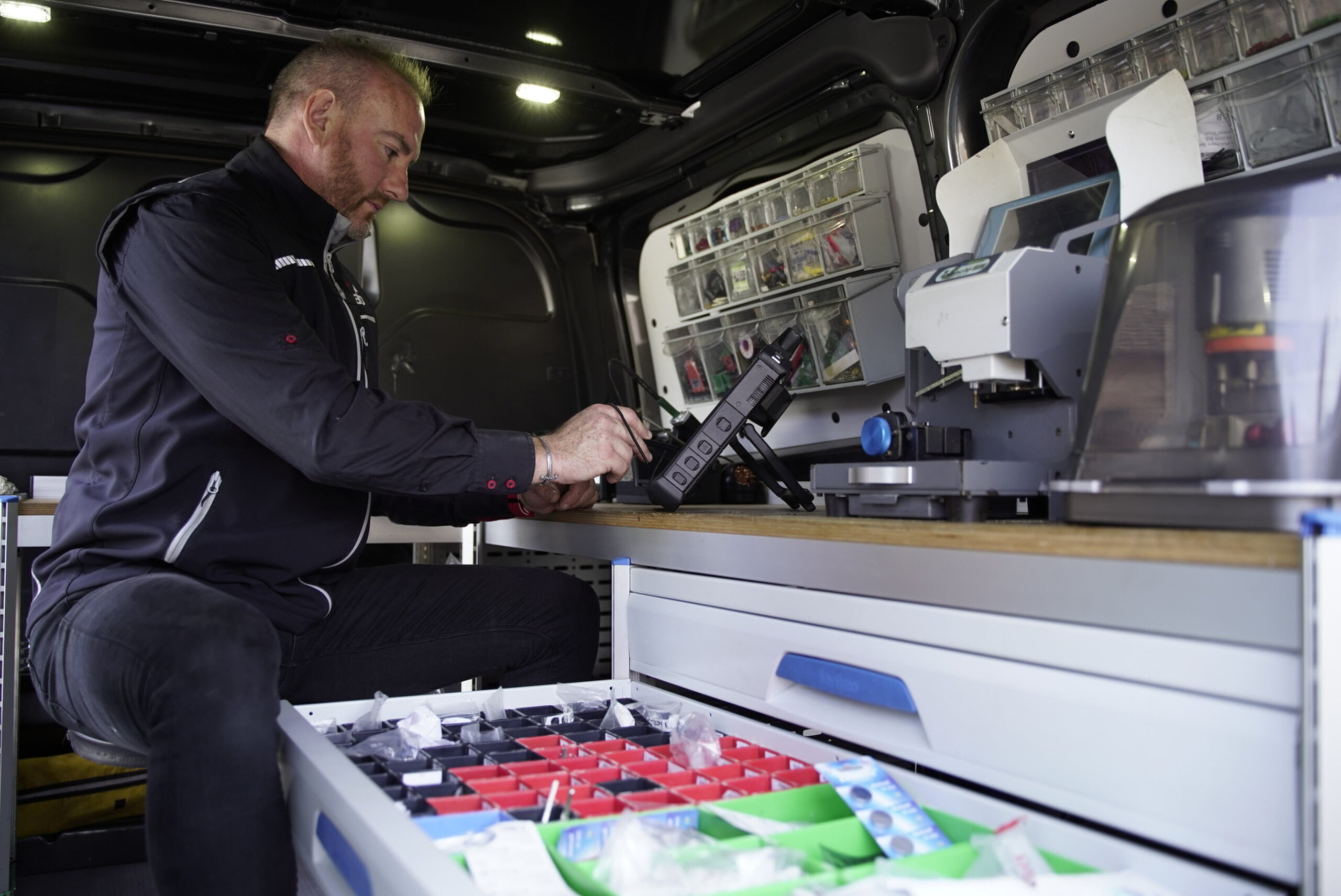
If you're thinking about purchasing a transponder key, first determine how important security is to you. Then consider your budget and lifestyle to decide whether or not the added expense is worth it for you.
Car dealerships typically charge a premium for key replacement services for cars. This is due to the fact that they have exclusive right to sell certain models of vehicles and have high costs of operation. There are numerous professional car locksmiths who provide the same service for less costs.
If you're unsure if your car has chip, ask your local dealer or auto locksmith. They will be able to tell you whether your vehicle has an electronic transponder and give you an estimate of the cost for an entirely new key. It is essential to select an auto locksmith that is reputable and has experience with your vehicle model, regardless of whether you opt for the transponder that is less expensive or the more expensive keys that are not transponder-compatible.
Laser-Cut Keys
Some newer vehicles use a more sophisticated design for keys called a sidewinder, or laser cut key. These keys require the services of a locksmith or car dealer to cut them and program the computer chip inside the key. Although these keys are more expensive than standard ones, they also offer more security features. This is why they are regarded as a better investment by people who want to stop car theft.
Contrary to conventional two-sided keys laser-cut keys are cut in the middle of the key only. These cuts are more precise and difficult to duplicate than the standard notches on regular blades. They are also harder to discern and are a great protection against thieves who might be.
To make a laser-cut key, a locksmith or dealer uses a milling machine that is specifically designed for this purpose. These machines use a bit that resembles a drill to slowly remove the key's metal. They can take out precisely the amount of metal required for a particular key, which gives them an extremely high level of precision. This makes it difficult for thieves to cut their own duplicate.
Another reason why keys that are laser-cut are more secure than conventional keys is that they aren't able to be used to unlock other similar vehicles as they can with standard key locks. When a regular key is put into the vehicle, it emits a signal that allows the vehicle to recognize it. The engine won't start when the key isn't recognized. However, laser-cut keys have an embedded transponder that is registered to a specific car. This means that if someone is able to program and cut a laser-cutted key, the engine will not start.
To cut a laser-cut keys technicians will need to have the vehicle Identification Number (VIN) of the vehicle to retrieve the appropriate specs for the CNC machine. The process can range between 15 minutes to a few hours based on the make and model of the vehicle that is being considered. After the correct specifications have been completed, a laser-cut key will be ready for programming by the locksmith or dealer.
Dealerships
Getting your car key replacement through the dealership can be the most expensive option, but it is often necessary. The positive side is that a lot of times, it will be covered by your warranty or insurance. Check with your auto insurer to ensure that key replacement is included in the policy. It's also a great idea to have any damaged keys that are stolen, lost, or damaged deprogrammed by the dealer, since this will stop anyone from using them in the future.
If you have an ordinary key fob, it could be the least expensive alternative to replace it at the dealership. If the key fob you have is not capable of cloning and has an embedded chip, it may cost more to replace it at the dealership. The cost of a key fob may vary greatly depending on the model and brand of your vehicle, so it's best to consult with local dealers, locksmiths or mechanics to get an accurate price estimate.
Another way to cut costs is to bring your spare key to the dealership and having it cloned there. This can be cheaper than having it cloned by a locksmith, but you'll want to ensure that your spare key is compatible with your car.
If you're replacing your vehicle key at the dealership or through a locksmith, it's important to make sure you note down your vehicle identification number (VIN). This will help to ensure that the key replacement is of the correct size and will be compatible with your vehicle. You should be able to find your VIN on the dashboard of your car, on the windshield in the corner of the windshield and on the side of the engine block, or in the owner's manual.
In the past, losing a car key was no big deal. However, the technology of modern cars has made it much more difficult to replace keys, which can be very expensive. It is best to be prepared by carrying a spare key with you or knowing what options you have for replacing your car keys in the event they are lost or stolen.